Best Fiends - Match 3 Puzzles
- 4.6
- Rating
- 50.00M
- Installs
- Free
- Price

 Analysis by App-foxy
I spent time with Best Fiends - Match 3 Puzzles as a relaxed but surprisingly strategic mobile game. It sits in the casual puzzle space, yet it is more than a quick grid-clearing distraction: the game combines match-three levels with a growing cast of characters, collectible progression, and a steady stream of goals that encourage you to return. The basic idea is easy to understand, which makes it approachable, but the later decisions are less automatic than the bright presentation first suggests.
That balance is the main reason I can see the appeal. I can play a level while waiting for an appointment, stop after a single attempt, or settle in for a longer session when I want something light. At the same time, the game is not completely consequence-free. Limited attempts, difficult boards, and the temptation to improve a team can make a casual session feel more demanding than expected. My overall view is positive, but I would recommend approaching it as a free game with optional spending rather than assuming every part of the journey will remain equally effortless.
What the game feels like after the first few sessions
The central loop is familiar: match pieces on a board, complete the level objective, and use the result to move forward. What gives this version its identity is the character collection around that puzzle foundation. The store summary describes a roster of over 50 cute characters to collect and level up, and that long-term layer changes how I think about each move. I am not only trying to finish the current board; I am also considering which characters deserve attention and how my developing team supports future challenges.
You May Also Like

 Blood Strike: 2.5 Anniversary
Blood Strike’s Loadouts Turn Every Drop Into a Tactical Gamble
A close look at Blood Strike’s custom loadouts: how fast access to signature weapons reshapes its battle royale rhythm, rewards preparation, and narrows the gap between fights.

 Pandora - Music & Podcasts
Pandora’s Music Is Easy to Start, but Harder to Recover
Pandora’s strength is its low-effort path from a seed to a station. Its weak spot is how much confidence it asks you to place in connection, setup, and quiet recovery.

 8 Ball Pool
 Is Built on Rivalries, Rematches, and Routine
A close look at the rivalries, rematches, shared routines, and unanswered safety questions that turn a quick pool match into a persistent mobile community.

 Samsung Music
’s Quiet Strength Is Playing What You Already Own
Its reach comes less from spectacle than from dependable access to a personal library. That simplicity is both the app’s strongest retention engine and its ceiling.

 AccuWeather: Weather Radar
AccuWeather Review: A Quick, Clear Forecast for Everyday Decisions
For everyday plans, the best forecast is the one you can understand quickly. AccuWeather makes rain timing, radar, and local conditions easy to act on, with a few trade-offs.

 Hill Climb Racing
Why Hill Climb Racing Still Turns Crashes Into One More Run
A tiny car, a bumpy hill and one more upgrade: Hill Climb Racing keeps resurfacing because its simple chaos makes every near-miss feel personal.
More From Our News Desk
View All News


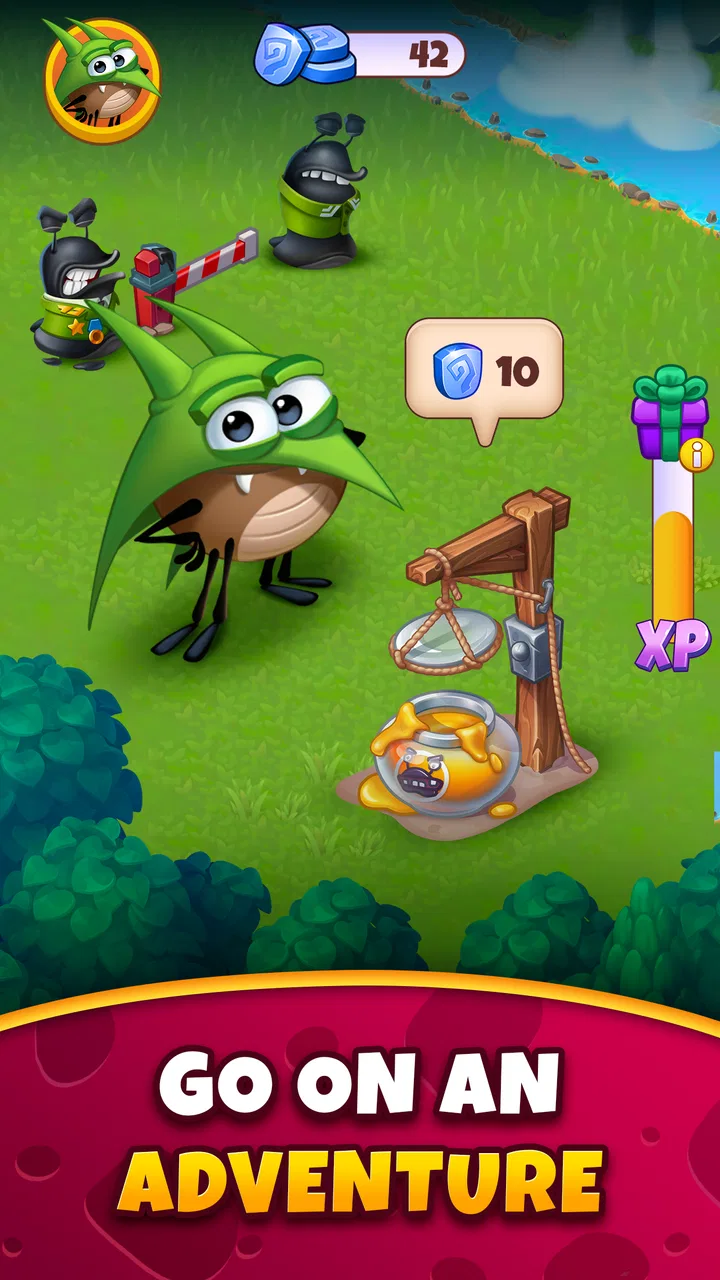
Playtika gives the game a colorful, friendly tone rather than a serious competitive atmosphere. The characters and presentation make failure feel less harsh during the early stages, and the simple controls are well suited to touchscreens. I never needed a complicated tutorial to understand the basic matching action. That accessibility matters because this is the sort of game people often open without wanting to study a ruleset first.
The strongest use case is short, repeatable play. A commute, a coffee break, or a few minutes before bed can all work well, especially when I want something more interactive than watching a video but less demanding than a full action game. The individual puzzle format also makes it easy to put the phone down between levels. However, anyone who dislikes repeating similar puzzle structures for a long time may eventually find the collection and upgrade layers more compelling than the board itself.
The game is free to download and is rated for Everyone, so it is positioned as an accessible choice for a broad audience. It has been available since December 10, 2014, and the current version is 18.0.0, with Android support beginning at version 6.0. Those details suggest a mature title that has had plenty of time to build up its content and systems. They also mean a new player is entering an established experience rather than a small experimental puzzle app.
Why the character layer matters
In a standard match-three game, a strong move is usually valuable because it creates a better board position. Here, I also think about the relationship between the move and the character progression around it. That gives otherwise ordinary matches a little more purpose. When I am working toward a difficult objective, I pay closer attention to the tools my selected characters provide instead of treating every colorful piece as interchangeable.
A useful habit is to avoid spending all of my attention on the largest immediate match. I first check the level objective, then look for a move that helps create a larger chain or improves the board for the next turn. This sounds basic, but the character system makes planning more worthwhile. A flashy move is not automatically the best move if it leaves the colors or pieces I need in awkward positions.
The collection also creates a personal sense of progress. Some players will enjoy building a broad roster, while others will prefer concentrating resources on a smaller group. I found the second approach easier to manage during normal play because it gives upgrades a clearer purpose. The trade-off is that specializing can make the experience feel narrower if a later level favors a different combination.
Where the pressure begins
The relaxed tone does not mean every level is equally forgiving. Puzzle games create pressure in several ways: a board can fail to provide the right opportunities, an objective can require careful sequencing, and a near-complete attempt can make another try feel especially tempting. That is where the free-to-play structure becomes important. The game includes in-app purchases ranging from $0.99 to $99.99 per item, so the spending scale runs from a small convenience purchase to a much larger commitment.
I appreciate that the purchase range is clear enough to set expectations before playing, but the presence of optional purchases changes the emotional rhythm. When a level is almost complete, it is easy to view a purchase as a shortcut rather than a deliberate decision. My practical advice is to decide your personal spending limit before a difficult streak begins. If I make that decision while frustrated, the board is no longer the only thing influencing me.
I would not describe the game as a good choice for someone who wants a completely pressure-free puzzle experience. Even if you never buy anything, the design of a progression-focused game can make waiting, replaying, or improving a roster feel slower than simply paying for convenience. That does not automatically make the experience unfair, but it does mean the free route requires patience and self-control.
Spending, fairness, and what I would watch closely
The clearest verified purchase fact is that the game is free to play and offers individual in-app purchases from $0.99 to $99.99. That tells me the financial model is central enough to mention, but it does not by itself prove how often a player will feel pushed toward buying. I would avoid assuming that every player needs to spend, just as I would avoid promising that the free path will always feel equally comfortable. My experience-based recommendation is to treat purchases as optional conveniences, not as part of the normal price of entry.
For a player who enjoys collecting, spending can be especially tempting because the roster is a visible form of progress. The desire to strengthen a favorite character is different from needing a move to finish a board, but both can arrive at the same moment. I found it helpful to separate those decisions: first ask whether I genuinely enjoy the puzzle, then ask whether a purchase adds lasting value for my play style. If the answer to the first question is no, improving the collection will not fix the underlying problem.
Fairness is also about whether skill remains meaningful. In this game, careful matching, objective awareness, and planning still matter. I can improve my results by scanning the board before moving, preserving useful colors, and avoiding a chain that looks impressive but does not serve the level goal. That makes the game more satisfying than a system where progress feels entirely dependent on random rewards or spending.
Still, puzzle randomness can blur the line between a mistake and an unlucky board. When a level fails because the needed pieces never appear, repeating it may feel less like learning and more like waiting for a better arrangement. That is a normal tension in match-three design, but it is worth recognizing before choosing this as a main game. Players who want strict, repeatable tests of skill may prefer a puzzle game with fixed layouts and no collection economy.
How I would play without overspending
I would begin by learning the level objective rather than making the first obvious match. Clearing pieces is not always the same as making progress.
I would keep a small group of characters developed enough for regular play instead of trying to upgrade everyone immediately. That keeps the collection layer understandable and reduces scattered resources.
I would replay a difficult level after a break instead of treating one failed attempt as a reason to buy assistance. A fresh look often improves decision-making more than a rushed response.
I would set a spending boundary before opening the game. The upper end of the purchase range makes impulse decisions particularly important to control.
This approach does not remove every source of frustration, but it keeps the puzzle at the center. It also helps answer a practical question many players have: can the game be enjoyed without paying? Yes, it can be approached that way, but the experience is best for people who are comfortable with gradual progress and occasional repetition. Anyone expecting a fully premium structure, with no purchase prompts or progression pressure, should choose a different type of puzzle game.
Is it fair for competitive-minded players?
I would be careful about calling this a competitive game in the strict sense. Its appeal is more personal: completing levels, improving a character collection, and trying to handle increasingly demanding situations. Because the purchase model is present, I would not use it as a clean measure of who is the best puzzle player unless the specific mode and rules make that distinction clear. A player willing to spend may have access to conveniences that change the pace of progress, and that can weaken comparisons between players.
For casual competition with friends, the game may still work if everyone agrees on the same expectations. Comparing completed levels or personal milestones can be fun, but I would not treat those results as a pure skill ranking. If your priority is an even playing field, a premium puzzle game or a title built around fixed competitive rules is likely a better fit.
That limitation does not hurt the game’s main purpose. I enjoyed it more when I treated progress as my own project rather than as proof that I was outperforming someone else. The cute character presentation supports that softer approach, and the casual category makes more sense when the game is judged as a personal time-filler with strategic touches.
Questions I would ask before installing
Will it suit a child or family device? The Everyone content rating makes it broadly accessible, and the controls are simple enough for new players. I would still supervise purchases on a shared device because the game is free to start but includes paid items. The age rating describes the intended content audience; it does not remove the need for sensible purchase controls.
Is it suitable for short sessions? Yes. The level-based format makes it easy to play briefly and stop. It also supports longer sessions for people who enjoy chasing progress, but the repeated puzzle structure may become tiring if you want constant novelty. I would install it for flexible breaks, not for a story-heavy experience that demands uninterrupted attention.
Can someone who dislikes in-app purchases enjoy it? They can, provided they are comfortable ignoring optional spending and accepting a slower or more repetitive route when progress becomes difficult. If seeing purchase options is itself irritating, a paid puzzle without this model would be a better match.
Is it a good alternative to other match-three games? Choose it if the character collection and leveling layer are important to you. Choose a simpler match-three game if you only want quick board-clearing with minimal progression management. Choose a premium puzzle title if you want to pay once and avoid the psychological pressure that can accompany optional purchases.
Does the large install base guarantee that I will like it? No, but it does show that the game has reached a substantial audience. It has more than 50 million installs, an average rating of 4.6 from around 2.3 million ratings, and roughly 185 thousand written reviews. Those figures indicate broad popularity, not a universal fit. The real decision comes down to whether you enjoy combining match-three play with collecting and gradual improvement.
My trust verdict after weighing the trade-offs
I came away seeing this as a polished, approachable casual game with a clear identity. The match-three foundation is easy to enter, while the character roster gives repeated levels a longer-term reason to matter. The best moments come when I stop making automatic matches and start planning around the objective, the available colors, and the characters I am developing. That extra layer is enough to separate it from a completely disposable puzzle app.
The main caution is the free-to-play economy. The game costs nothing to download, but purchases can reach $99.99 per item, so I would not hand it to a child or install it on a shared device without purchase safeguards. I also would not recommend it to someone who expects every difficult level to feel like a pure test of skill. Random board conditions, progression pressure, and optional conveniences can all influence how fair the journey feels from one player to another.
For me, the right way to use it is with a clear boundary: play for the puzzles and the characters, accept that some progress may take time, and never let a nearly completed level decide how much money to spend. Under those conditions, it is an enjoyable companion for short breaks and relaxed evenings. If you prefer a one-time purchase, a completely even competitive environment, or puzzles without collection management, another option will serve you better.
Playtika’s game earns its place among popular casual titles because it offers more direction than a bare match-three board without becoming difficult to understand. I would recommend it to players who like cute character collecting, gradual upgrades, and flexible sessions. I would skip it only if the purchase model or repeated progression loop conflicts with what you want from a mobile puzzle game. In that narrower but important sense, my verdict is favorable: it is worth trying for free, as long as you decide your spending rules before the game starts deciding them for you.
FAQs for Best Fiends - Match 3 Puzzles
01What is the main objective of Best Fiends - Match 3 Puzzles?
Best Fiends - Match 3 Puzzles is a fun, casual puzzle game where players match objects to defeat slugs and progress through levels. The primary objective is to collect and upgrade a team of fiends, each with unique abilities, to help solve increasingly challenging puzzles and uncover the game's engaging storyline.
02Is Best Fiends - Match 3 Puzzles free to play?
Yes, Best Fiends - Match 3 Puzzles is free to download and play on both Android and iOS devices. However, it does include in-app purchases that allow players to buy additional items, boosters, or currency, which can enhance the gaming experience or speed up progress.
03Do I need an internet connection to play Best Fiends?
While Best Fiends - Match 3 Puzzles can be played offline for the most part, certain features, such as events and updates, require an internet connection. Playing online also enables cloud saving, allowing you to sync your progress across multiple devices.
04How often does Best Fiends receive updates or new content?
The developers of Best Fiends regularly release updates and new content to keep the game fresh and engaging. This includes new levels, events, and fiends. Players can expect frequent updates that introduce new challenges and enhance gameplay, ensuring a dynamic gaming experience.
05What makes Best Fiends different from other match-3 puzzle games?
Best Fiends stands out with its unique combination of puzzle-solving and RPG elements. Players not only match objects but also collect and upgrade a diverse team of fiends with distinct abilities. The engaging storyline, colorful graphics, and regular content updates make it a standout in the genre.
Pros
- Engaging storyline enhances puzzle experience.
- Stunning graphics with vibrant
- colorful design.
- Regular updates with new levels and events.
- Challenging puzzles keep gameplay exciting.
- Offline mode available for on-the-go play.
Cons
- In-app purchases can be quite costly.
- Energy system limits extended play sessions.
- Some levels feel overly repetitive.
- Requires frequent updates for new content.
- Advertisements can interrupt gameplay.

Best Fiends - Match 3 Puzzles
Gallery